Players unite against Fifa president Gianni Infantino, citing need for change

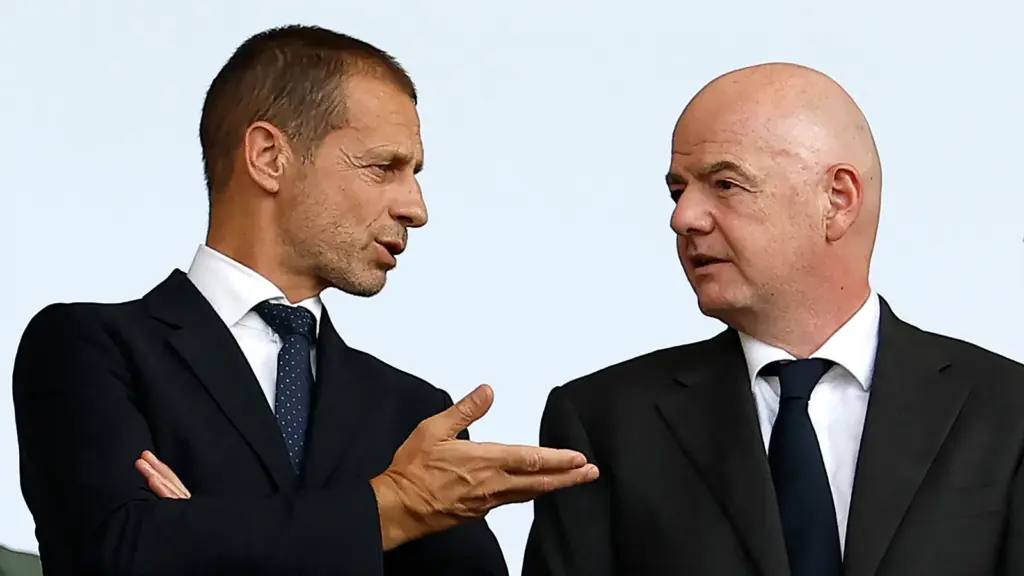
A coalition of current and former footballers has voiced concerns regarding Fifa president Gianni Infantino, asserting that “change is necessary” at the helm of the global governing body. This sentiment follows recent controversies surrounding Infantino’s leadership, including a plan to sell stakes in competitions to private investors.
Among those who have spoken out is former Manchester United and France defender Mikael Silvestre, a member of Fifa‘s Players’ Voice Panel. Silvestre issued a statement titled “Enough is Enough!” on Monday, which has since been widely shared on social media. Notable figures who have amplified this message include England defender Lucy Bronze, France‘s 1998 World Cup winner Emmanuel Petit, and former England goalkeeper David James.
The statement highlights that players “share the exact same concerns as the millions of fans around the world” regarding Infantino’s controversial proposal to involve private investors in competitions, including the World Cup. Critics argue that this approach deviates from the sport’s fundamental principles.
Concerns over Fifa’s leadership
The collective statement criticises the operational methods of the governing body, noting, “We have watched the game we love drift away from its core values under Fifa‘s current leadership.” It further alleges that significant decisions have been made without consulting players or considering the fans who are integral to the sport’s existence.
The statement underscores the urgency for change, stating, “Power has blurred the current leadership’s ability to distinguish between its own interests and what is best for football.” It concludes that “Recent events have made silence impossible,” calling for unity from all levels of the sport, from grassroots to the top, to support “structural change” within Fifa. The aim is to ensure players and fans have a “real, direct say” in how football is managed.
Infantino has faced increasing scrutiny over his leadership in recent weeks, particularly due to the backlash generated by the Fifa Forward Enterprise (FFE) controversy. This has led to significant opposition from several confederations.
Uefa, for instance, has threatened to boycott all Fifa competitions. Uefa president Aleksander Ceferin has indicated that he expects Infantino to either resign or face a challenge in an election scheduled for next March. Numerous national governing bodies, including the football associations of England, Wales, and Scotland, have also withdrawn their support for the current Fifa leadership.
Silvestre’s involvement in the Players’ Voice Panel, a body created by Fifa itself to advise on tackling racism in football, signifies an internal challenge to the organisation’s leadership. The panel comprises 16 members.
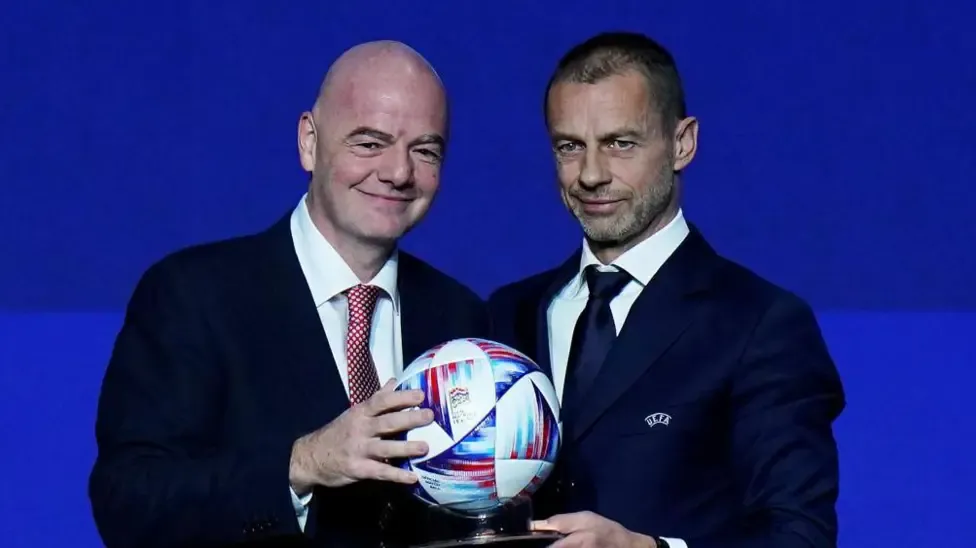
Despite the widespread criticism, Infantino has received support from some quarters. Former Barcelona striker Samuel Eto’o, who is now the president of the Cameroonian Football Association, stated that he does not believe the Fifa leader has “done anything wrong.”
Eto’o expressed his conviction that the proposed project “could have been incredible” for African nations, suggesting it “would have reset the balance of power in football” and prevented African talent from disappearing to play for other nations. He credited Infantino with changing football by providing opportunities for nations that previously lacked them to participate in the World Cup, enabling smaller nations to gain representation in these competitions, and assisting the development of African federations.
Leadership showdown looms
Infantino’s pursuit of private investment for future World Cups has drawn intense scrutiny and triggered a strong backlash. This has led to Uefa, Concacaf, and AFC reportedly considering a no-confidence vote. Allegations of “deception” have also emerged, with European football leaders threatening a comprehensive boycott of Fifa competitions.
Despite being widely considered a natural successor, Uefa boss Aleksander Ceferin has confirmed he will not pursue the Fifa presidency. He stated his intention to focus on his current mandate in Europe, citing his enjoyment of working at Uefa and the belief that his credibility is higher if he is not interested in the top position at Fifa.
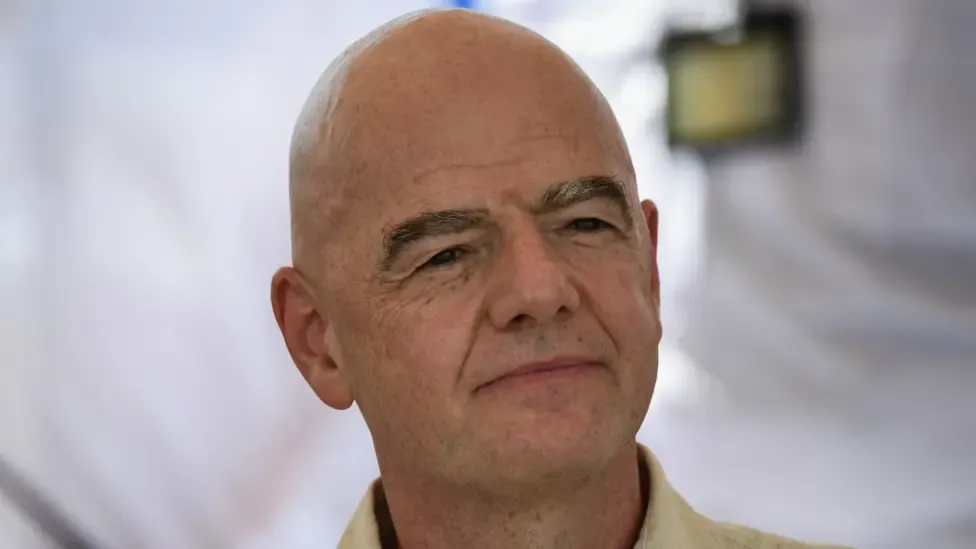
Ceferin, however, warned of an impending leadership confrontation, noting that “Things are changing every day.” While he has not spoken with Infantino, he outlined two potential outcomes. One possibility is that Infantino recognises a lack of support, not only from those who vote but also from the broader football community, including fans, players, former players, and coaches. The second option is that Infantino proceeds to the elections in March, in which case Ceferin anticipates a candidate will emerge to challenge him.
Infantino’s current isolation in Europe marks a significant shift, as he heavily relied on the continent’s support to secure the Fifa presidency in 2016. Today, football associations in the UK and the Republic of Ireland are among those who have officially withdrawn their backing.
Fifa has reportedly attempted to portray this opposition as an “elitist European agenda” to deflect criticism. Ceferin strongly refuted this narrative, criticising Infantino’s apparent strategy to create a division between the global game and Uefa. Ceferin remarked that he hears Fifa playing on the idea that “‘arrogant Europe is against us,'” and that “‘They have enough money, but I help the small and the poor.'” Ceferin suggested that Infantino should be reminded that he is European and was supported by Uefa, a fact he appears to have overlooked.
The future of Fifa‘s leadership is set to be determined at the upcoming congress in Morocco. While Infantino reportedly maintains loyalty from the African and South American confederations, a coordinated no-confidence vote could lead to an unprecedented change in leadership. If Infantino chooses not to resign, an opposition candidate is expected to emerge soon to formally challenge his presidency.
Source: bbc.com

