Spain secures World Cup title as Argentina faces scrutiny for final performance

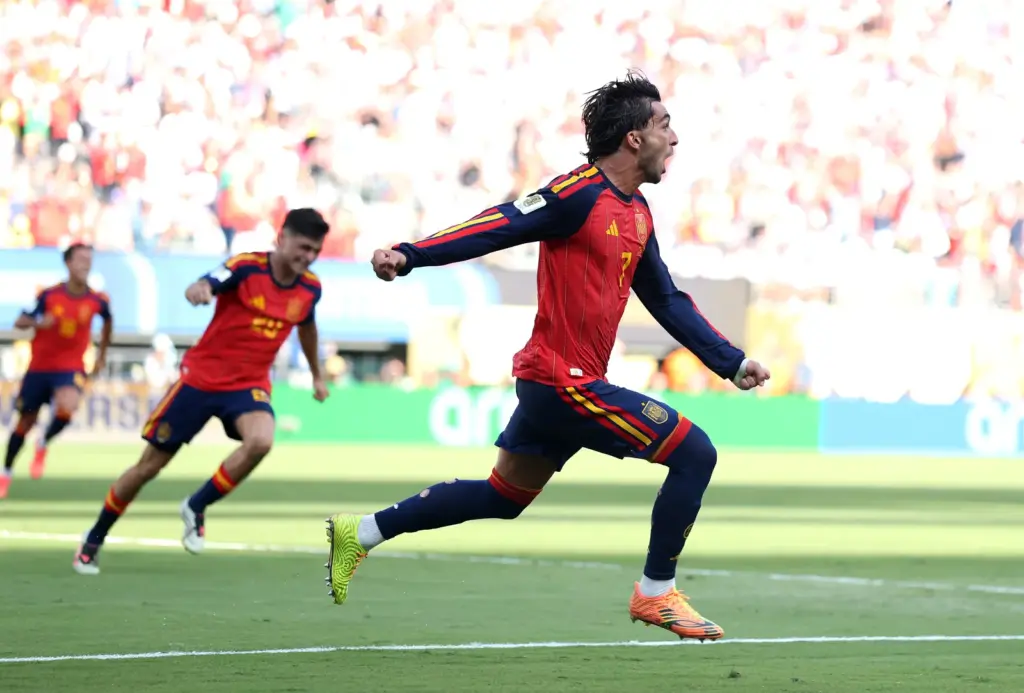
Spain has claimed its second World Cup title, defeating Argentina 1-0 in a final match marked by controversy and an ill-disciplined display from the Argentine side. The victory for Spain was sealed by a goal from Ferran Torres in the second half of extra time at the New York New Jersey stadium.
The match saw Argentina, led by Lionel Messi, deliver a defensive performance that generated little threat to the Spanish goal. They registered no shots in normal time and no efforts on target throughout the entire 120 minutes of play. This performance has drawn criticism, particularly regarding the team’s conduct.
Argentina’s disciplinary issues and national reaction
Argentina’s disciplinary problems were evident during the final. Enzo Fernandez received two yellow cards, first for dissent and then for a challenge on Pau Cubarsi, leading to his sending off. Following the final whistle, Leandro Paredes was also shown a red card for his angry reaction. Nahuel Molina was also involved in confrontations with Spanish players, contributing to what were described as disgraceful scenes.
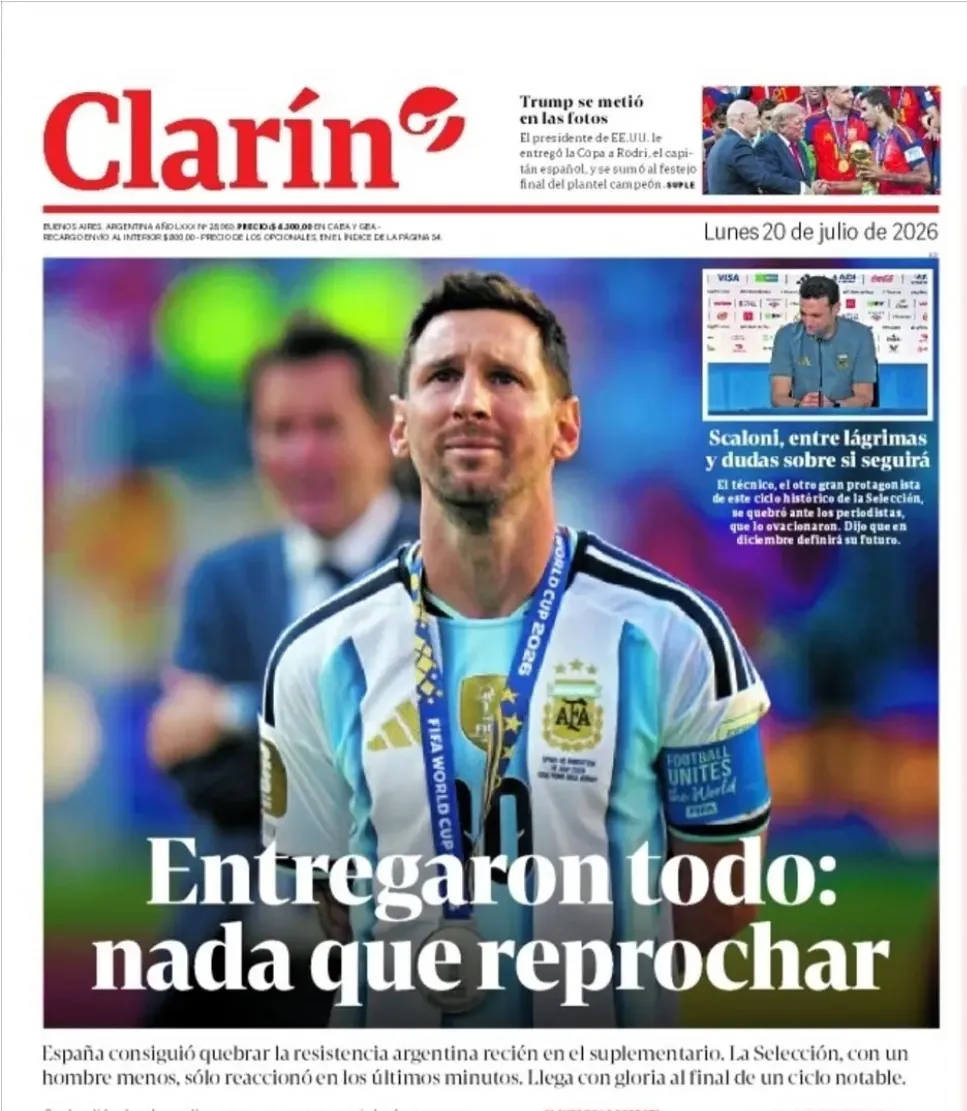
Despite the team’s performance and the post-match incidents, Argentina’s national newspapers largely defended their side. Publications like Clarin featured a tearful image of Messi with the headline, “They gave it their all, nothing to blame them for.” La Nacion echoed a similar sentiment, stating, “Argentina gave it their all – and they’re a source of national pride.” Another paper, Ole, used the headline “May they be eternal,” also accompanied by an image of an emotional Messi.
Former footballer Gary Neville, commenting on the match, remarked on Paredes’ conduct, stating, “I love the competitiveness of the Argentines but Paredes has been a disgrace the last couple of games.” FIFA is expected to investigate the post-match incidents to determine if additional disciplinary action is warranted.
Spain’s triumph and celebrations
In contrast to Argentina’s reception, Spain’s national media celebrated their team’s second World Cup triumph with joy. Headlines from Spanish newspapers reflected their elation. AS declared, “The world is ours,” adding that the victory was achieved through “absolute justice.” El Periodico proclaimed, “The world surrenders to Spain,” while ABC lauded Spain as “invincible,” highlighting their 38-game unbeaten run in international football. El Mundo stated Spain was “on top of the world,” with multiple papers calling the team “double champions” and “superstars.”
The Spanish team, including captain Rodri and head coach Luis de la Fuente, returned to Madrid to a hero’s welcome. Their plane landed at Adolfo Suárez Madrid–Barajas Airport, where they were greeted by crowds. Celebrations had already begun in Madrid’s Puerta de Sol and other major squares, continuing into the early hours of Monday morning. Supporters gathered in Cibeles Square in anticipation of the team’s open-top bus parade.
The parade was scheduled to commence at 7pm local time (6pm BST) after the players and coaching staff had a period of downtime and lunch at a secure location. The victory marks a significant achievement for Spain, with Ferran Torres’s decisive goal in the 106th minute securing the trophy. Eight players from Barcelona were part of the winning Spanish squad, including Joan Garcia, Eric Garcia, Pau Cubarsí, Gavi, Pedri, Dani Olmo, Ferran Torres, and Lamine Yamal.
Tactical approach and player contributions
Under Luis de la Fuente, Spain’s tactical approach, while still rooted in ‘tiki-taka’, has shown slight evolution. In the final, Dani Olmo, Lamine Yamal, and Pau Cubarsí were in Spain’s starting lineup. Pedri and Ferran Torres entered the game in the second half of normal time, with Torres scoring the winning goal from a layoff by fellow substitute Nico Williams. Eric Garcia made his tournament debut in extra time, replacing Aymeric Laporte.
This triumph adds to the legacy of Spanish football, with the 2026 World Cup winners now forming part of a list of 20 players who have won the World Cup while being Barcelona players. This list includes notable names such as Romário in 1994, Rivaldo in 2002, and several players from Spain’s 2010 winning squad.
The victory provides a stark contrast to Argentina’s disappointing performance, which saw Lionel Messi, at 39 years old, denied a World Cup title in what was likely his final appearance in the tournament. The aftermath of the match, particularly the conduct of some Argentine players, further soured the occasion for the football icon.
Read Also
Source: skysports.com

